City Sewer vs Septic
Sewer or Septic in Lake Havasu City, AZ
How the city's 2002–2011 conversion changed almost every home in Lake Havasu City, how to confirm what your own home uses, and what changes when a home is still on septic.
The Conversion Story
Is my Lake Havasu home on city sewer or still on septic?
Almost certainly city sewer. Before 2002, roughly 90% of Lake Havasu City's residential population relied on individual septic systems — and then the city ran one of the largest septic-to-sewer conversions in the country, removing nearly 22,000 septic systems between 2002 and 2011. A home inside the city today drains through that programme's sewer network unless it sits in a remaining pocket outside the expansion footprint.
The scale of it: voters approved a $463M bond in November 2001, construction ran from 2002, and the programme was substantially complete in November 2011 — two years early, at a final cost of $348M — having installed 268 miles of sewer main and 334 miles of laterals. The practical result for drains is that almost every in-city home connects through a 2002–2011-era PVC lateral, and neighbourhoods such as Mockingbird, Trotwood and Chemehuevi were among the final areas the programme connected.
How to confirm for your own home
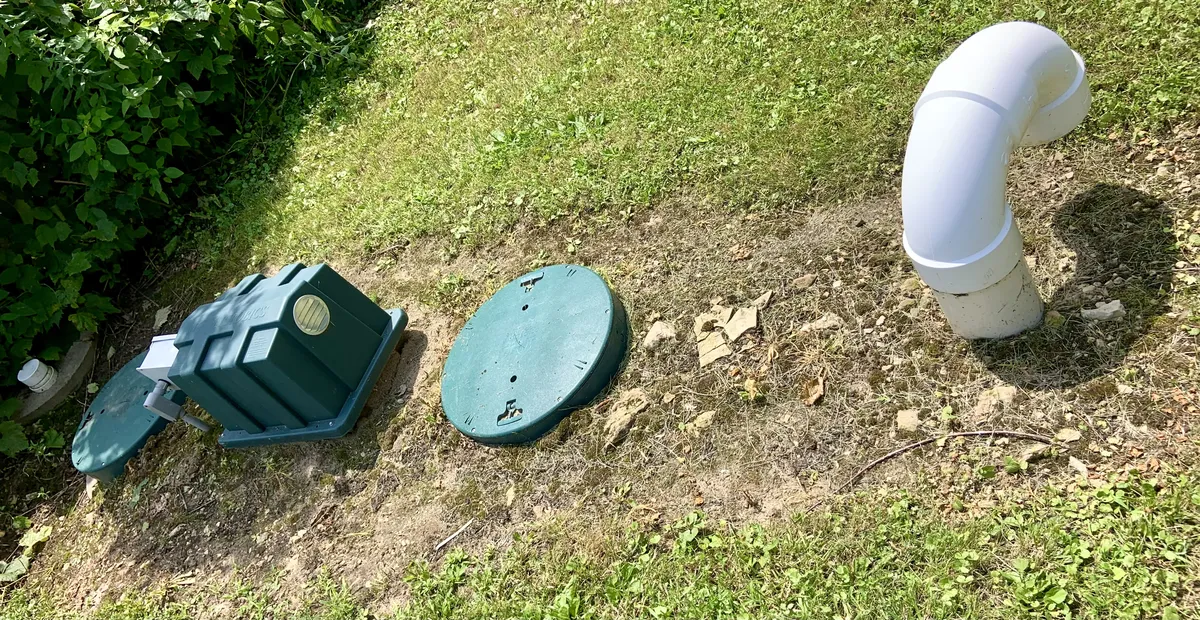
Check the home's city utility bill first: a sewer service charge on the account means the home is connected to city sewer, and that bill is the deciding record for the address. Supporting clues at the property itself include a capped sewer cleanout in the yard and the absence of a septic tank lid or risers — and the home's sale paperwork and disclosures usually state which system it uses. We deliberately do not publish a street-by-street list of homes still on septic, because no city source names them; the utility account for your specific address settles the question.
Jetting on Septic & Older Pipe
Is hydro jetting safe on a septic system / on 1960s–70s pipes?
Jetting a line that runs to a septic tank is a different question from jetting a sewer lateral. The tank and its baffles set the limits on the septic side, and on any 1960s–70s line — sewer or septic — the camera decides before pressure does: a sound line can be jetted, a fragile one gets cable cleaning instead.
This is a live local question, not a generic one, because remaining septic pockets outside the conversion footprint are real in Lake Havasu City, and the city's oldest tracts date from its 1963 founding. For the sewer-line side of jetting safety, see our hydro jetting page; the rule on both systems is the same — inspect first, then match the method to what the camera shows.
Living on Septic
Septic care — frequently asked questions
Are chemical drain cleaners safe for septic systems?
No. The bactericidal chemicals that make chemical openers work also kill the bacteria a septic tank runs on — the tank digests waste biologically, and poisoning that biology is the opposite of maintenance.
A septic home's drains are a mechanical-cleaning-only zone: cable or jet cleaning clears the line without putting anything into the tank that the tank then has to survive. That applies to every remaining septic home in Lake Havasu City's pockets outside the conversion footprint.
Do you add bleach to a septic tank to remove the smell or kill bacteria?
No — killing bacteria is the opposite of what a septic tank needs. The tank works because its bacteria break down waste; bleach poured in to chase a smell attacks the very process that keeps the system functioning.
A septic smell has a cause worth finding — a full tank, a venting problem, a failing line — and masking it with a bactericide trades a symptom for a damaged system. The guidance on this is consistent: bactericidal chemicals do not belong in a septic system.
Do toilet cleaners kill bacteria in septic tanks?
In quantity, yes: antibacterial cleaners flushed regularly do reach the tank and can harm the biology it depends on. The moderation answer is ordinary, measured use of products labelled for septic systems rather than heavy antibacterial routines.
One toilet cleaned on a normal schedule is not the threat; the cumulative load of bactericidal products from every fixture, every day, is. No specific product is endorsed here — the principle is dose.
Do I need to add bacteria to my septic tank?
A normally used tank grows its own bacteria from the waste stream itself — that supply is continuous and self-renewing. Additive products are sold hard and evidenced weakly, and the honest answer presents both sides: sellers claim they restore and boost the tank, while the underlying biology suggests a healthy tank needs no help.
We recommend none of them. If a tank is genuinely underperforming, the causes to check are mechanical — load, leaks, and how long since it was pumped — not a missing supplement.
Is it safe to put baker's yeast in a septic tank?
Baker's yeast is the folk-remedy form of the additive question, and the answer follows the same theme: a healthy tank does not need it. The tank's own bacteria, fed by normal household use, do the digesting — yeast adds nothing the system is missing.
It is unlikely to be the worst thing a tank has seen, but "harmless" is not the same as "useful." Spend attention on pumping intervals and what goes down the drains instead of on remedies.
How much does it cost to replace a 25-foot sewer pipe and connect it to septic?
No figure is published here, deliberately: no sourced figure exists for this job, and any number offered without a look at the specific line would be invented. What can be stated honestly is what the price is actually made of.
The drivers are the length of run, the depth it sits at, how much excavation the route requires, the tank-side work at the connection, and restoring whatever surface — soil, gravel, concrete or landscaping — the dig crosses. Two homes with the same pipe length can differ on every one of those, which is why a camera look and a site visit come before any real quote.
What is the process when a home is switched from septic to city sewer?
The process runs in this order: the home's line is connected to the new sewer main, the old tank is decommissioned — pumped out, then filled or removed — and the home takes on a monthly sewer bill in place of septic maintenance.
Lake Havasu City already lived this at city scale between 2002 and 2011, when its expansion programme made the switch for nearly 22,000 homes. For a remaining pocket home facing the same step today, the sequence is the one the city itself followed — connect, decommission, then bill — and the yard work is the connection trench and the old tank, not a replumb of the house.
Not sure which system your home is on, or whether a line can be jetted safely on it? A camera inspection settles both questions before any cleaning starts.
A drain problem rarely fixes itself
Call for a camera-first look at the line and an itemised written quote before any work begins — you see what we see, then you decide.